
If you are weighing Bizzabo for one conference rather than a year-round program, this comparison is for you.
Bizzabo is one of the few platforms in this category that publishes its pricing, which is to its credit, but the number comes with a condition worth knowing before you book a demo: it is sold by annual subscription only. Every price below comes from the vendor’s own pages, pulled in 2026.
The short list
- Conference Tracker for one conference at a time, from $990 per event and bought without a sales cycle.
- Sched for agenda-first events on published tiers from $200 per event.
- Expo Pass for badge-first onsite operations, from $2,495.
- EventMobi for association events, per event from $3,000 or annually from $8,900.
- Accelevents for annual portfolios from $7,500, the closest shape to Bizzabo at a lower floor.
How we compared
We compared published pricing, whether a platform can be bought for one event at all, and the conference machinery an association or academic program actually needs, which comes down to registration, check-in, attendance and credits, and abstract review. Conference Tracker is our product, so we kept the method fair: each vendor’s own published numbers, sourced, with a plain section on who should stay put.
Published pricing at a glance
| Platform | Best for | Published pricing | Pricing model |
|---|---|---|---|
| Bizzabo | year-round enterprise event programs | from $17,999 per year ($499 per user monthly, 3-user minimum) | annual subscription, no single-event purchase, unlimited events included |
| Conference Tracker | one conference at a time | from $990 (300-attendee event) | flat per event, no subscription, self-serve checkout |
| Sched | agendas and simple registration | from $200 per event; attendance tier from $1,500 | per event or annual, scales by attendee count, ticketing fees |
| Expo Pass | badge printing and check-in | from $2,495 | quote built per event above the floor |
| EventMobi | association conferences | from $3,000 per event, $8,900 per year | per attendee, add-ons priced separately |
| Accelevents | registration-centric portfolios | plans at $7,500 and $13,500 | annual, virtual as paid add-on |
What Bizzabo costs, and why single-event organizers look elsewhere
Bizzabo publishes $499 per user per month billed annually with a three-user minimum, which its own page states as starting at $17,999 per year with unlimited events and unlimited registrations included. Its FAQ then answers the follow-up question directly: the platform is sold as an annual subscription and cannot be purchased for a single event.
Around that subscription sit an enterprise feature set, a branded mobile app, wearable smart badges and professional services that are quoted separately, and integrations with Salesforce, HubSpot, Marketo, and Eloqua.
For a marketing team running events all year, unlimited events against a fixed subscription is exactly the right trade. For an association or a university running one annual conference, the same arithmetic turns upside down, because you would be paying for a year of platform subscription to run three days of event, with the wearable badges and services quoted on top. That inversion, rather than any complaint about the product, is what sends organizers to a page like this one.
Conference Tracker
Check people in fast. Prove they were there.
Conference Tracker scans attendees with the phones your staff already carry, tracks time in every session, and issues certificates and CEU transcripts on its own. One conference ran 2,623 attendees across 186 sessions on it.
30+ years building attendance tracking for events and education

Conference Tracker: one conference at a time, from $990 per event
Conference Tracker is priced the other way around. It starts at $990 for a 300-attendee event, flat per event, with nothing metered per attendee and nothing recurring between events.
Buying works the same way. The plan, the attendee limit, and exhibitor lead licenses all go through a checkout inside the account, so a single conference does not need a procurement cycle to get started, and a team that does run several events still works from one login, switching between its licensed conferences and copying one event’s configuration onto the next instead of rebuilding it.
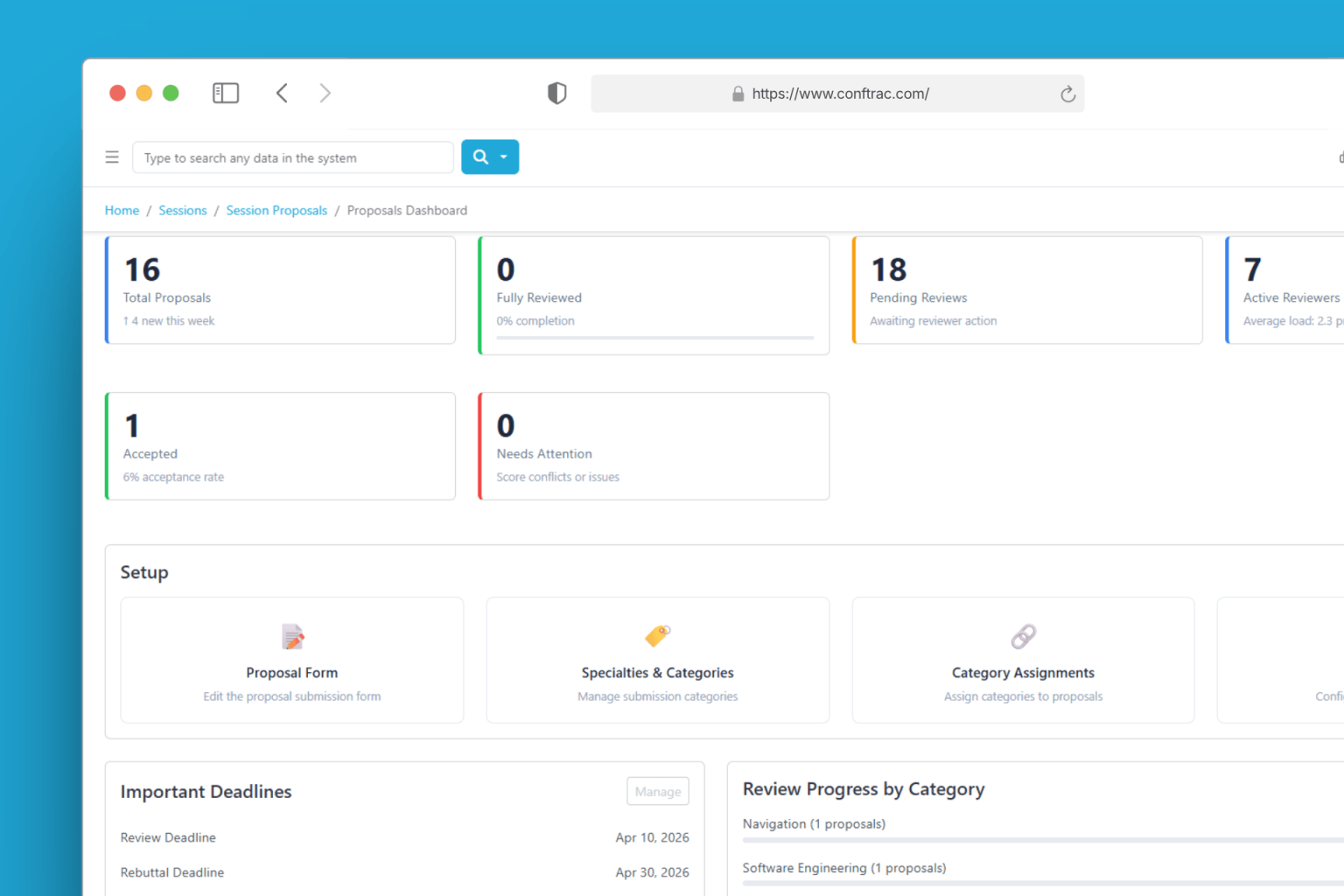
The conference machinery is the part an association or academic program will compare hardest, and here Conference Tracker runs the whole call for papers in one place. You define the submission form field by field, review can be open, single-blind, or double-blind, reviewers are matched by specialty with conflict-of-interest settings and capacity caps, submitters get a rebuttal phase to answer their reviews, and decisions go beyond a straight yes or no to accept, decline, waitlist, or request revision.
Accepted proposals are then dragged onto a calendar, where they become scheduled sessions with their presenters already attached. The abstract and proposal management side of the product covers this end to end.
Attendance is the other half. Each session carries its own presence rule, credit can be held back until a quiz is passed or an evaluation completed, virtual viewers are verified automatically, and every credit traces back through five-status logs to the swipe behind it, so attendees can download their own certificates and CEU transcripts with the evidence already attached.
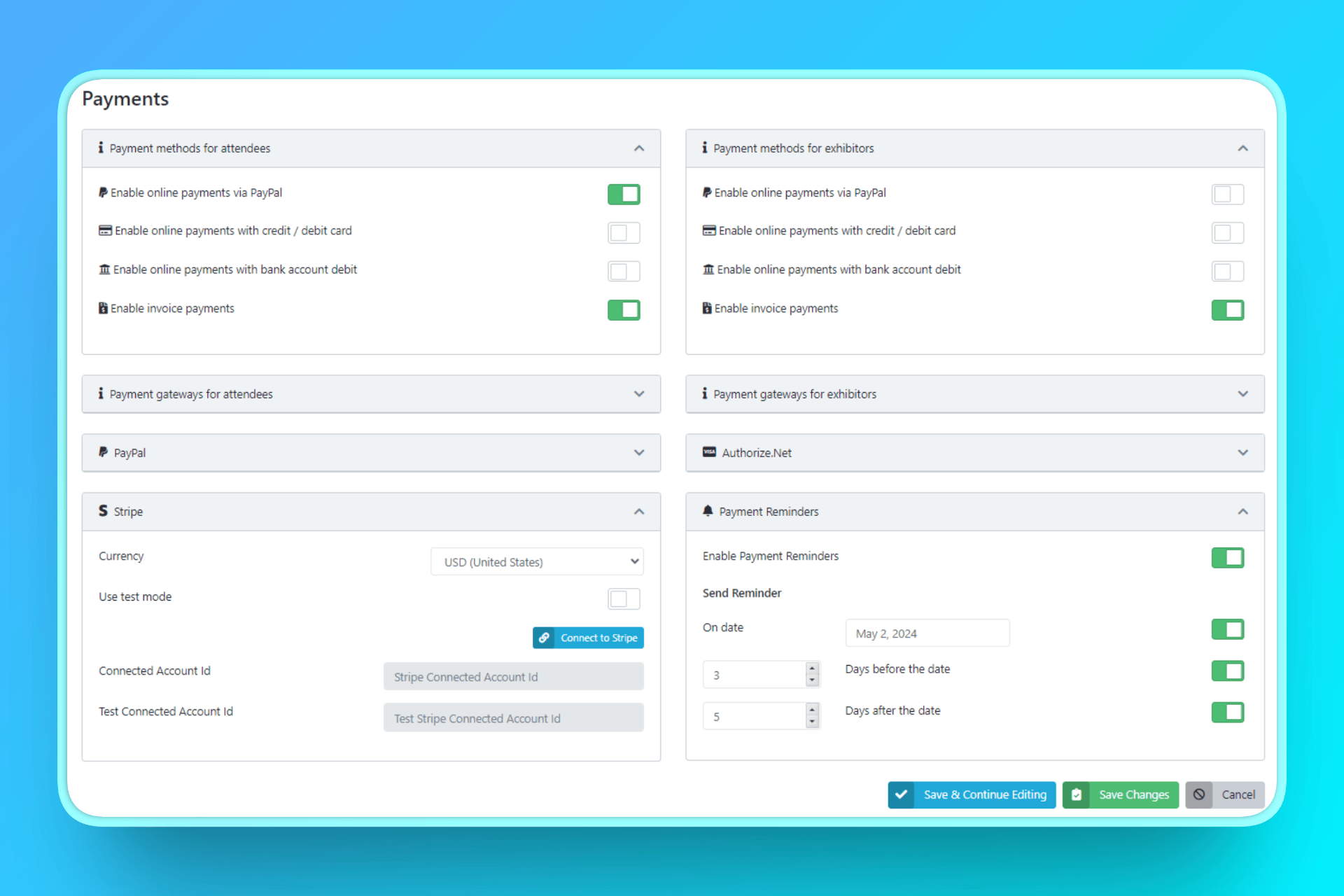
Registration payments land directly in your own PayPal, Stripe, or Authorize.net account rather than passing through the vendor. The Texas Emergency Management Conference ran 2,623 attendees across 186 sessions on this stack and went from purchase order to a running conference in 12 days, which is what that arrangement looks like at scale.
If your calendar holds one conference rather than twelve, request a Conference Tracker demo and price that event on its own terms.
The honest limits mirror Bizzabo’s strengths. There is no marketing automation suite, no proprietary wearable badge hardware, and no professional-services team running the event with you, so an enterprise marketing organization with dozens of field events a year is buying a different category of product.
Sched: agenda-first on published tiers from $200
Sched publishes its tiers openly, with agenda, registration, and app basics from $200 per event and attendance tracking, badges, lead retrieval, and its advanced call for papers arriving at the tier from $1,500 per event. Pricing scales with attendee count, ticketing fees apply, and events under 50 attendees ride a free tier, which makes it the cheapest published entry point here for a small single event with simple needs.
Expo Pass: badge-first onsite from $2,495
Expo Pass publishes a starting price of $2,495 and leads with the onsite stack of registration, badge printing and check-in, lead capture, and attendance tracking, with CE tracking and certificates advertised. The final number comes from a quote shaped by attendee count and product mix, and unlike Bizzabo it is bought per event rather than per year.
EventMobi: per event or per year, priced by attendee
EventMobi publishes both models, per event from $3,000 or annually from $8,900 with unlimited events, with per-attendee rates its page puts at $1 to $3. Its check-in app records session in and out with the duration visible, and CE verification is stated. Because the extras are itemized separately, badge stock, lead capture per exhibitor, and integrations among them, a single-event budget should be built from the total rather than the headline.
Accelevents: annual portfolios from $7,500
Accelevents publishes annual plans at $7,500 and $13,500 with unlimited events and unlimited admin seats, plus unlimited ticket types and custom fields. Virtual events are a paid add-on, and check-in works offline with automatic sync. It is the nearest thing here to what Bizzabo offers, an annual platform for a team running a calendar, at a lower published floor.
Where Bizzabo stays the right call
Keep Bizzabo when the subscription is the point: a marketing organization running events all year that wants one branded app across the whole portfolio, deep CRM and marketing-automation integration, wearable badge hardware, and a services team alongside the software. Unlimited events against a fixed annual fee genuinely rewards volume, and because the price is published, that is easy to model. Switching earns its cost when the calendar holds one or two conferences a year and the finance question is what this event costs rather than what the year costs.
Which alternative fits which event
Choose by how often you run events and by what each one has to prove. If you run one conference a year that certifies attendance, Conference Tracker does that for $990 per event. If the event is small and agenda-first, Sched covers it, and a badge-heavy show points to Expo Pass. An association calendar with several events is better served by EventMobi per attendee or Accelevents annually than by any single-event price.
If the comparison you are really running is against the enterprise field rather than the subscription question, our Cvent comparison covers that end of the market, and every number above is the vendor’s own, current as of 2026.