Every educator has heard the classic question, “What do you want to be when you grow up?” Hosting a career day is a powerful way to help students start finding answers.
A well-planned event connects classroom learning to real-world jobs, sparking curiosity and motivation in students. In this guide, you’ll find creative career day ideas for elementary, middle, and high school, plus practical planning tips to deliver a program that is fun, memorable, and meaningful. By the end, you’ll know how to introduce a variety of careers in an engaging way and why it matters for your students’ futures.
Why Career Days Matter
Career days are more than a break from routine; they are an investment in students’ futures. Early exposure to career concepts helps children see the real-world relevance of their education and envision diverse opportunities ahead.
When students meet professionals from different backgrounds and industries, it broadens horizons and challenges stereotypes. Representation matters. Seeing someone “like them” succeeding in a role can inspire students to aim higher and consider pathways they might not otherwise explore.
From elementary through high school, career days nurture ambition, show the “why” behind school, and connect young people with role models in the community.
Planning A Successful Career Day Event
Organizing a school-wide career day can feel daunting, but the right structure makes it manageable. Early planning, clear goals, and cross-team coordination are essential.
Start Early And Build Buy-In
Begin planning at least 4-5 months in advance. Coordinate with the principal to secure a date on the school calendar and notify teachers early to avoid conflicts.
Form an organizing committee to handle speaker outreach, logistics, and communications. Starting small in year one is perfectly acceptable; you can expand the scope as you gain experience and contacts.
Set Clear Goals
Define what you want students to gain. Is the aim broad exposure to many careers, inspiration in specific fields, or developing job-readiness skills?
Your goals shape the format. Elementary events typically prioritize exploration and fun career day activities, while high school programs can emphasize practical skills like résumé writing, interviewing, and networking.

Invite A Diverse Range Of Speakers
Engage parents, alumni, and local professionals as presenters. Aim for a wide variety across trades, small business, the arts, healthcare, engineering, technology, public service, and more.
Diversity across roles, genders, and cultures ensures every student can see a potential role model. Tap your PTA or PTO for community connections and consider a simple hospitality room to thank volunteers.
Prepare The Presenters
Professionals are not always accustomed to classroom engagement. Provide a short guide with career day presentation ideas:
- Bring props or tools for show-and-tell.
- Include short hands-on demos or visuals.
- Keep language age-appropriate and interactive.
- Built-in Q&A.
- Explain the education or training pathway.
Elementary audiences respond to simple visuals, stories, and games. High school students value real-world anecdotes, problem-solving scenarios, and candid discussions about pay, qualifications, and career progression. Small giveaways like stickers or sample tools can help capture attention.
Mix Up Formats
Offer multiple formats to match different learning styles. Combine a brief keynote or panel with classroom talks and hands-on stations.
For larger events, issue a “career day passport” for students to stamp at sessions they attend. This encourages exploration and provides a light incentive for participation. If it’s your first time, limit the number of sessions and rotate groups through a clear set of activities to maintain quality.
Logistics And Student Engagement
Create a detailed schedule with session times, locations, and rotation plans. Brief teachers so transitions run on time. Provide students with a simple program or map so they can navigate the day confidently.
Involve students beforehand. Invite them to submit questions or vote on career fields they are curious about. This input helps tailor the program and boosts engagement from the start. A short opening assembly with an ice-breaker can set an energetic tone.
Leverage Technology
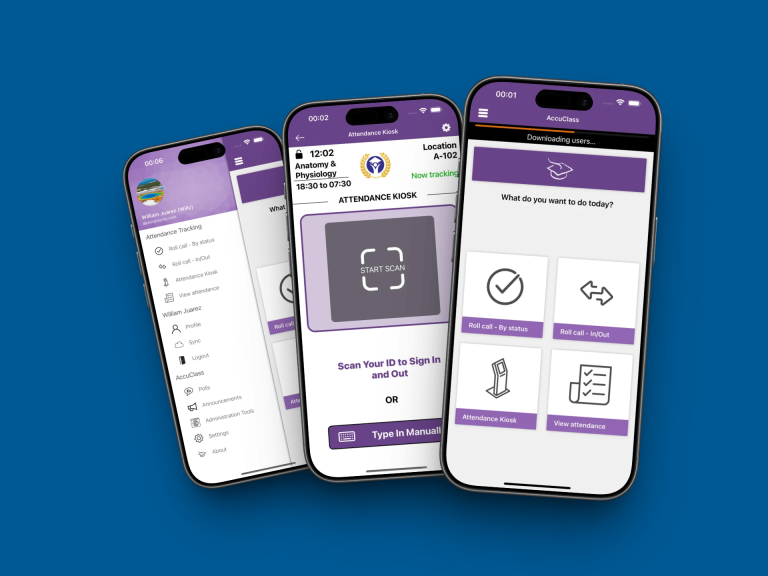
Use digital tools to streamline operations. An attendance tracking app such as AccuClass can simplify session check-ins. Students can self-sign in by scanning an ID on a mobile device, creating instant attendance records without manual roll calls.

Digital polls can capture quick feedback on sessions and identify which activities resonated most. Thoughtful use of technology keeps the focus on learning while keeping logistics organized.
Promote And Build Excitement
In the weeks leading up to the event, build anticipation. Announce new speakers and activities in newsletters and morning announcements.
Encourage teachers to connect course content with real jobs or assign short reflections on a career students admire. Decorate hallways with college pennants, career posters, or student-made “when I grow up” art to create visible momentum.
Plan Follow-Up Activities
A meaningful career day continues after the final bell. Ask teachers to debrief with students: Which careers were interesting? What surprised them?
Have students write thank-you notes to presenters. Older students can complete a brief reflection or research assignment on a career that intrigued them. Consider sharing a take-home “career resource guide” with reputable sites and local opportunities so families can continue the exploration.
Next Up: Grade-Level Career Day Ideas
With planning fundamentals in place, the next sections will outline tailored career day ideas for elementary, middle, and high school. You’ll find age-appropriate activities and themes to make your event engaging at every level.
Career Day Ideas for Elementary School
Career days in elementary school are about sparking curiosity and showing the fun side of exploring professions. At this age, students are wide-eyed about the world of work. Even though adulthood feels far away, they are eager to learn about firefighters, teachers, doctors, artists, and the jobs their own parents do.

The key is to keep activities playful, visual, and interactive to match young learners’ developmental level. In our experience, elementary students love opportunities to role-play and use their imagination. Below are creative career day ideas to make an elementary event shine.
“When I Grow Up” Dress-Up Day
Invite students and teachers to come dressed as what they want to be when they grow up. Costumes can be simple or elaborate, from a chef’s apron to a scientist’s lab coat or a firefighter’s helmet.
Create a sense of occasion with a Career Parade in the hallway or playground, where each class shows off its outfits. Consider small ribbons or awards such as “most creative career costume” or “most realistic uniform.” A memorable example was a student who dressed as an archaeologist with a pith helmet and homemade digging tools, which became the talk of the school.
Career Show-and-Tell
Turn classic show-and-tell into a career exploration activity. Ask each speaker to bring props or tools related to their job for a hands-on classroom session. A veterinarian might bring stuffed animals and toy stethoscopes for kids to “examine,” while a musician could demonstrate an instrument.
Students can also participate. In the week before the event, have them do a mini show-and-tell about a family member’s job or a career they find interesting. This makes abstract jobs concrete.
Family and Community Presenters
Parents and family members make excellent guest speakers, since children are fascinated by what familiar adults do at work. Arrange a rotation where small groups of parents visit each classroom or set up simple stations.
Keep talks short, about 10 to 15 minutes, and encourage storytelling, such as “a day in the life.” Hearing from familiar faces increases engagement and makes it easy to cover a range of careers without extensive external logistics.
Hands-On Career Stations
Transform a gym or library into an interactive career expo. Set up several stations or booths, each devoted to a different occupation or field. For example, a “Science Lab” with a simple experiment, an “Artist’s Studio” with art materials, and a “Construction Zone” with plastic hard hats and block-building challenges.
Have students circulate in small groups and spend time where interest is highest. Provide a passport or checklist to encourage them to visit all stations. A Career Scavenger Hunt with prompts like “Name one tool a dentist uses” or “Find a career that uses a microscope” adds motivation. Stickers or small prizes for completing the hunt keep energy high.
Career Storytime or Book Read-Aloud
For a quieter activity, invite guests to read a picture book related to their profession. There are children’s titles for many jobs, such as zookeepers, builders, teachers, and chefs.
After the reading, allow students to ask questions about the guest’s work. This format is ideal for younger grades because it delivers a career talk in the familiar structure of storytime. If an in-person visit is not possible, a brief virtual read-aloud accompanied by a short workplace tour works well.
Career Crafts and Art Projects
AccuClass
Let students check themselves in to class
Students check in and out by scanning the classroom QR code with their phone or swiping their ID card. AccuClass marks each student Present, Tardy, Left Early, or Absent by your rules, and alerts the instructor when absences reach your limit.
The QR code changes on a timer you set, so a code sent to a friend outside the room soon stops working
Use arts and crafts to reinforce learning. After visiting speakers or stations, have students create a simple craft tied to a job that interests them. Examples include paper firefighter helmets, DIY stethoscopes, or drawings of themselves in a career uniform.
Another option is a personal “career booklet.” Each time students learn about a new job, they draw or write a few notes on a page. By the end of the day, each child has a keepsake summarizing their favorite discoveries and sharing points for families. This reflection helps solidify the experience.
Career Parade of Classrooms
If gathering the whole school is challenging, try a rotating classroom parade. Each room focuses on one career for the day and decorates accordingly. Classes then take turns visiting one another.
For instance, Grade 1 could become a veterinary clinic, Grade 2 a restaurant kitchen, and Grade 3 a space agency. With teacher guidance, students prepare a short presentation or skit for visiting classes. Each child becomes both a presenter and an explorer, which is collaborative and fun, almost like a living museum of careers created by the kids.
“Bring Your Child to Work” Field Trips
When feasible, seeing a workplace firsthand is powerful. Coordinate with safe, nearby locations to host small class field trips, such as the local library, fire station, or grocery store. Even a short tour can leave a lasting impression.
If leaving campus is not possible, bring the field trip to school. A fire truck visit or a mobile clinic demonstration can be unforgettable. Some schools designate a Go-To-Work Day where students sign up to visit businesses in small, chaperoned groups. This requires more planning and permissions, but it is highly immersive for upper-elementary students.
The overarching theme for elementary is exploration through play. Keep activities high-energy, visual, and tactile. A successful elementary career day ends with students excitedly talking about the many possibilities they discovered and how career day ideas connect learning with the world beyond school.
Career Day Ideas for Middle School
Middle school is a period of growing independence and expanding interests. Students in grades 6–8 can handle longer sessions and more detail, yet they still benefit from interaction and variety.

The aim at this level is to broaden awareness of many pathways while linking those paths to emerging skills and interests. It is also a prime moment to introduce practical, age-appropriate career readiness skills in a fun way.
Classic Career Fair
Set up the auditorium or gym as a traditional career fair with tables or booths for each organization or profession. Local businesses, community groups, and nearby high school or college programs can staff displays with posters, tools, and product samples.
Allow students to stroll at their own pace or in small groups, asking questions as they go. To guide exploration, provide a career fair scavenger checklist such as “Talk to at least one person in a healthcare role” or “Find a job that involves coding.”
Ensure a broad mix of options so students see hands-on, technical, creative, and public service roles.
Career Clusters or Themed Rooms
Introduce the idea of career clusters by organizing sessions by theme. One room can host STEM careers, another Arts and Communication, another Health and Medicine, and another Trades and Engineering.
Place two or three speakers or activities in each themed room and let students rotate based on interest. Clear signage, such as “If You Love Science, Start Here,” helps students make connections and discover lesser-known roles within fields they already like. This structure also highlights options that do not require a four-year degree.
Interactive Workshops and Demos
Keep hands-on learning central. Offer short workshops where students try a skill tied to a job. Examples include a basic coding challenge led by a developer, a forensics demo with fingerprinting, a mini culinary class with a chef, or a first aid practice with an EMT.
These activities turn career exposure into active learning and create memorable experiences that make the working world feel tangible.
Career Panels
Host panel discussions with 3–5 professionals from related areas. A “Tech Careers Panel” might include a programmer, a graphic designer, and a robotics engineer.
Have them share how they entered their fields, then take student questions.
Limit panels to 20–30 minutes and appoint a moderator to keep the conversation focused. Hearing multiple perspectives side by side shows that there is no single path to success and invites comparison of training routes and day-to-day realities.
“Wheel of Careers” Game
Add a gamified element with a spinning wheel labeled with job titles or categories. When it lands on a career, present a quick talk, short video, or trivia question.
You can run this between sessions or at a dedicated booth. Include “Mystery Career” rounds with clues for students to guess the job. Offer small prizes for correct answers or enthusiastic participation to keep energy high.
Career Interest Surveys
Before the event, have students complete a brief career interest inventory. Use results to group students for certain sessions or to create a personalized highlight list for each student.
Even if you do not sort by results, giving students their interest clusters primes them to ask better questions and to connect personal preferences with possible careers.
Job Shadow or Virtual Tours
If full job shadowing is not feasible, simulate it with short “day in the life” videos or live virtual tours. A journalist can show a newsroom, a park ranger can stream from the field, or a lab tech can walk through a workspace.
Play these during the day or set up viewing stations. Virtual tours are ideal for careers where equipment is difficult to transport or demonstrations are not viable on campus.
Skill-Building Mini-Sessions
Introduce foundational skills with brief workshops. Offer “Resume Basics” that translates middle school experiences, such as clubs, volunteering, and household responsibilities, into future resume entries.
Include a communication session where students practice introductions, a firm handshake, and making eye contact. Tie these skills to the fair by rewarding students who approach an adult, introduce themselves, and ask a thoughtful question.
Community Service and Nonprofit Careers
Show that meaningful work exists across sectors. Invite representatives from nonprofits, public agencies, and community services to explain how their roles help others.
Consider a service component such as assembling care kits or designing posters for a cause, supervised by a nonprofit partner. This helps students see that impact and purpose can be central to a career.
Bringing It Together
Middle school career day ideas should mix exploration with structure. Students ought to leave having discovered new possibilities and, ideally, with the first sparks of a plan.
Keep them active, respected with real choices, and challenged with authentic tasks. Engagement often follows naturally when the right spark meets the right student.
Career Day Ideas for High School
By high school, students are actively weighing their options and need both inspiration and clear next steps. A successful program should connect coursework to real pathways, highlight multiple post-secondary routes, and build practical readiness skills.

For teachers and principals, this is a chance to reinforce college and career readiness goals in a tangible way while keeping the day engaging and student centered. The following career day ideas emphasize depth, relevance, and real-world preparation.
Expanded Career Fair With Industry Variety
Use a fair-style format, but broaden participation. Invite employers alongside community colleges, universities, apprenticeship programs, trade schools, and military representatives so students can see education-to-career pipelines in one place.
Ask organizations to staff booths with young professionals or school alumni. Teens relate well to speakers who navigated the same hallways recently.
Prevent passive walkthroughs by requiring meaningful interactions. For example, provide a checklist that asks students to gather signatures after asking a question at a set number of booths.
Workshops For Job Readiness Skills
Offer hands-on sessions that translate directly to applications and interviews. Run resume writing labs led by HR practitioners or counselors who understand online applications and modern formats.
Set up a free LinkedIn headshot station. Pair it with a short segment on professional profiles and digital presence.
Schedule mock interviews. Students sign up for 10-minute meetings with volunteers, receive targeted feedback, and leave with specific improvement points. This reduces anxiety and builds confidence for real interviews.
Career Panels And Speaker Series
Organize panels aligned to student interest areas, such as Healthcare, Tech and Engineering, Arts and Media, or Public Service. Encourage panelists to discuss role expectations, education pathways, early career mistakes, and practical advice.
Add a concise keynote by an inspiring local figure or alum to frame the day. Keep talks focused and time-bound to maintain attention.
Alumni Networking And “Where Are They Now”
Leverage your alumni community. Create a simple display or slideshow that highlights graduates and their current roles, with permission.
Host an informal networking block where students mingle with recent alumni. Provide conversation prompts and model professional etiquette so students practice introductions, follow-up questions, and closing a conversation politely.
Hands-On Simulations
Make pathways tangible through demonstrations and simulators. Showcase Career and Technical Education programs. Automotive students can demonstrate a quick pit-stop tire change, culinary students can prepare tastings, and robotics teams can run live demos.
Invite partners to bring portable equipment when possible, such as medical training models or virtual welding rigs. Peer-to-peer demonstrations are particularly effective because students see their classmates performing skilled tasks.
Career Competitions
Harness healthy competition to drive engagement. Ideas include a mini coding challenge, a culinary cook-off judged by local chefs, an engineering tower-build with limited materials, a debate on a business ethics scenario, or a marketing pitch contest.
Offer relevant prizes like gift cards, mentoring sessions, or job-shadow certificates. Competitions attract students who may not attend panels and often uncover new interests or talents.
Professional Skills And Etiquette Training
Employers consistently emphasize soft skills. Run quick modules on professional email writing, meeting behavior, time management, and dress expectations across different workplaces.
Use short role-plays to make lessons memorable. For example, compare a distracted meeting scenario with a model version that demonstrates active listening, note-taking, and constructive input.
College And Career Resource Center
Designate a drop-in space staffed by counselors and advisors. Provide guidance on applications, financial aid, scholarships, internships, and local workforce programs.
Offer printed guides and curated digital lists that cover job outlook, salary ranges, certifications, and degree paths for fields students explored. Encourage students to leave with at least one concrete next step.
Capstone: Career Day Pledge Or Reflection
Close with intentional reflection. Ask students to write a brief takeaway and a next action, such as arranging a job shadow, drafting a résumé, or contacting a mentor.
Consider a simple pledge card that students sign and keep. Making a written commitment helps solidify momentum and turns inspiration into action.
High school career day ideas work best when they combine inspiration with preparation. Treat students as emerging professionals. Give them structured choice, authentic practice, and clear resources. The result is a meaningful bridge from classroom learning to life after graduation.
Conclusion: Inspiring Futures and Making It Count
Putting together a career day is substantial work, yet the impact on students is profound. You are not just filling a schedule with activities; you are igniting curiosity and planting seeds that can grow into future careers.
Whether it is an elementary student proudly declaring a dream after peering into a microscope, a middle schooler discovering a new interest through a hands-on demo, or a high schooler shaking hands with a future mentor, these moments connect learning to life in a way students remember.
As you implement these career day ideas, keep the event student-centered. Focus on exposure, engagement, and inclusion across every path: trades, high tech, public service, and the arts. Your role as teachers and principals is to facilitate meaningful connections and sustain excitement. Use the tips in this guide, then add your own creative twist to make career day an annual highlight at your school.
Do not forget to leverage tools and community support to lighten the load. For example, AccuClass can streamline attendance tracking and quick feedback so you can concentrate on what matters most: engaging with students and guests. Lean on colleagues, parents, and local partners; successful career days are a team effort.
By investing now, you help students dream big and prepare for the real world. Years from today, one of your former students may return as a guest speaker to inspire the next generation. That is the lasting value of thoughtful planning and well-chosen career day ideas. Good luck, and enjoy inspiring the future.