Managing a school successfully is no small feat. As a principal, you balance academic programs, staff development, family partnerships, operations, and student welfare, while ensuring every learner has a fair chance to thrive.
Research indicates that effective principals account for a significant share of a school’s impact on student learning. Your leadership is therefore pivotal. In this guide on how to manage a school successfully, you will find actionable strategies, the core characteristics of effective principals, and practical steps to lead with clarity and purpose.
From setting a clear vision and cultivating a positive culture to using data such as attendance and academic performance, you will learn how to make informed decisions that move your school forward. The sections below outline what makes a strong principal and how to apply those principles in practice.
What Makes a Good Principal: Key Characteristics of Successful School Leaders
Being an effective principal requires wearing many hats while modeling strong, consistent leadership. Great principals are not merely administrators; they are vision-setters, communicators, mentors, and problem solvers whose actions influence outcomes across the school.
It is often observed that leadership ranks just behind classroom instruction in its effect on student success. In other words, what you bring to the role directly shapes results. The following characteristics stand out.
Visionary leadership
A strong principal articulates a compelling vision for the school’s future and sets high expectations for staff and students. They chart a course for academic success and inspire others to contribute. This includes defining goals and standards and reinforcing them in daily routines, meetings, and celebrations. The tactics behind that course live in our guide to student retention strategies.
Strong work ethic and integrity
Effective principals lead by example. They demonstrate dedication, reliability, and professional conduct. By holding themselves to high standards, they foster trust and set the tone for both staff and students. Consistency and fairness build credibility.
Excellent communication
Clear, timely, and transparent communication is essential. Successful principals articulate the mission, listen actively to concerns, and keep families informed about initiatives and changes. They tailor messages to teachers, parents, and students so that expectations are understood and shared.
Empathy and support
Approachability and genuine care matter. Strong leaders respect teachers as professionals, listen to student perspectives, and respond to individual needs. By offering support and resources when challenges arise, principals cultivate loyalty and a positive climate.
Decisiveness and problem solving
School leaders face complex choices, from discipline to budgeting. Effective principals make well-considered decisions promptly, balancing analysis with action. They address root causes, remain calm under pressure, and guide teams toward durable solutions.
Delegation and empowerment
No principal can or should do everything. High-performing leaders recognize staff strengths and delegate meaningful responsibilities. Involving teachers in decision making and inviting staff to lead initiatives builds capacity, morale, and innovation while allowing the principal to focus on priorities that most influence student growth. Empowerment also creates shared ownership of results.
These qualities can be learned and strengthened over time. By cultivating them intentionally, you will be better equipped to manage your school effectively and sustainably.
Setting a Clear Vision and High Expectations
One of the first steps in managing a school successfully is establishing a clear, compelling vision. Effective principals know where they want to take the school and ensure everyone understands the direction. Shaping a vision of academic success for all students is a central priority of strong leadership.
Begin by defining your mission and translating it into concrete goals. For example, commit to every student reaching grade-level proficiency in reading, or to increasing mathematics proficiency by a defined percentage within a set period. Specific, measurable targets provide focus and guide resource allocation.
Set high expectations for both students and staff, coupled with the support needed to meet them. Communicate that every child can learn and every educator can grow. Provide professional development, coaching, and time for collaboration so that ambition is matched by capability.
Reinforce the vision consistently. Do not let it sit in a handbook. Weave it into staff meetings, parent updates, classroom walkthroughs, and morning announcements. Many principals use concise themes for the year to ensure the message is visible and memorable.
Engage stakeholders in shaping and owning the vision. Invite teachers into goal-setting discussions. Listen to student representatives and family groups. When people have a voice, their commitment increases and implementation improves.
Hold academic standards high while avoiding unattainable demands. Promote a mindset of continuous improvement, celebrate visible wins, and address obstacles directly. When necessary, reallocate resources, refine curriculum, or adjust schedules to align with the vision. Leadership sometimes requires challenging established routines to achieve better outcomes.
Finally, revisit the vision as conditions change. As goals are met or new needs emerge, refine priorities while keeping the long-term horizon in view. By setting a clear vision and high expectations at the outset, you create the foundation for every other aspect of successful school management.

Fostering a Positive School Culture and Climate
A thriving school rests on a positive culture where students feel safe and motivated, teachers feel valued, and parents feel welcome. As principal, creating a climate hospitable to learning is a core leadership responsibility.
This does not happen by accident. Culture is shaped intentionally through daily actions, clear policies, and consistent follow-through aligned with your vision for how to manage a school successfully.
Start with safety and order. Students learn best in calm, organized, and predictable environments. Establish clear rules, consistent routines, and maintain clean, well-kept facilities. When classrooms run smoothly and disruptions are handled consistently, the focus returns to learning.
Discipline should be fair and constructive. Set school-wide behavior expectations and apply them uniformly. When possible, use proactive and restorative approaches, such as conflict resolution and counseling. The aim is physical and emotional safety, where students understand expectations and trust that adults will support them.
Next, invest in relationships. Effective principals build a professional community among staff. Be visible, visit classrooms to show interest in teaching and learning, and hold regular check-ins. Small gestures, recognizing milestones, offering timely appreciation, providing planning time, build trust and morale.
Encourage collaboration. Create professional learning communities and team meetings where teachers share strategies, analyze student work, and solve problems together. When educators feel supported and connected, students benefit.
Build rapport with students. Be an approachable presence. Greet learners in the morning, attend lunch and events, and be present at performances and games. Visible engagement shows that you care and helps you catch issues early. Learning names, listening carefully, and inviting student voice through councils or feedback sessions signal that every student matters.
Recognize and celebrate progress. Highlight academic growth, positive behavior, and contributions to the school community. Consider Student of the Week spotlights, attendance shout-outs, and public acknowledgment of teacher achievements. Celebrations attach positive emotion to school goals and motivate sustained effort.
Prioritize well-being. A positive climate supports social-emotional needs. Promote initiatives such as peer mentoring, anti-bullying programs, and evidence-based social-emotional learning. Ensure counselors, nurses, and support staff have the tools to respond quickly when students need help. Visible care fosters trust and a sense of security.
In summary, culture is built on safety, support, and shared values. By creating order, nurturing strong relationships, and celebrating wins, you cultivate a climate where teachers can teach and students can learn at their best. This hospitable environment becomes fertile ground for academic success.
Effective Communication with Stakeholders
Communication is the lifeblood of school management. As principal, you bridge the school and its stakeholders, teachers, staff, students, families, and the wider community. Clear, consistent, and two-way communication builds trust, prevents misunderstandings, and keeps everyone aligned with school goals.
Below are practical guidelines for each group.
1. Teachers and staff
Maintain open, two-way channels. Share key decisions, policy changes, and upcoming events with enough lead time to plan effectively. Use concise, purposeful staff meetings alongside opportunities for input.
Invite feedback and practice active listening. Even when you cannot implement every suggestion, acknowledge perspectives and explain decisions. Informal walk-throughs and hallway conversations often surface useful ideas that formal meetings miss.
Respect professional autonomy. Offer support, remove barriers, and recognize expertise. Principals who communicate with transparency and trust earn stronger commitment and better implementation.
2. Students
Communicate with clarity and approachability. Use age-appropriate language in announcements and assemblies to reinforce values and expectations. Create avenues for student voice, open forums, advisory groups, surveys, so learners can share concerns and ideas.
Mind non-verbal signals. Warm greetings, attentive posture, and calm responses communicate respect and care. Consistent, positive interactions build rapport and increase buy-in for school initiatives.
3. Parents and families
Be accessible and responsive. Offer clear contact paths and respond promptly and empathetically. Hosting periodic coffees or meet-and-greets encourages dialogue and partnership.
Provide regular updates. Use newsletters, email, the school website, and messaging tools to share events, achievements, and procedural changes. Frame parents as allies in learning and offer practical ways to support study at home.
Communicate about progress proactively. Do not reach out only for problems. Share positive updates, and when concerns arise, take a partnership stance: “What can we do together to support your child?” Ensure communications are culturally sensitive and, when needed, translated.
4. Community and external stakeholders
Schools thrive with community support. Proactively share successes and needs with local organizations and leaders. Maintain a professional presence across appropriate channels and seek partnerships for internships, resources, and volunteer programs.
Respond constructively to community concerns, such as traffic or facility use. Transparent engagement builds goodwill, broadens support, and can elevate student opportunities.
Principles that apply to all audiences
Be clear, consistent, and genuine. Explain the “why” behind decisions in plain terms. Use multiple channels to reinforce key messages. Follow through on commitments, whether a promised callback or a planned update. Above all, listen. Create safe forums for feedback from staff, families, and students. When people feel heard and informed, trust grows, and that is a defining marker of successful school leadership.
Empowering and Developing Teachers and Staff
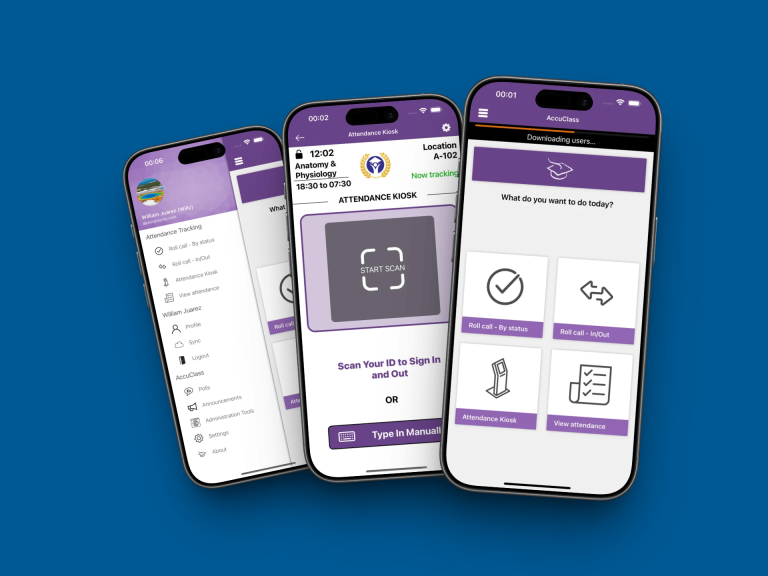
AccuClass
Let students check themselves in to class
Students check in and out by scanning the classroom QR code with their phone or swiping their ID card. AccuClass marks each student Present, Tardy, Left Early, or Absent by your rules, and alerts the instructor when absences reach your limit.
The QR code changes on a timer you set, so a code sent to a friend outside the room soon stops working
If students are the heart of a school, teachers and staff are its backbone. A principal’s ability to manage a school successfully depends on how well they support and develop their team. One of the most important qualities of a good principal is bringing out the best in others.
You cannot do everything yourself. With a strong, empowered staff, you will not need to. The following practices help cultivate an outstanding team of educators and support personnel.
Hire the right people and retain them
Effective school management starts with thoughtful staffing. Design hiring processes that draw candidates with strong content knowledge, sound pedagogy, and alignment with your school’s values and culture. Prioritize qualities such as passion, adaptability, and a collaborative mindset.
Once hired, provide a structured induction. Pair new teachers with mentors, clarify expectations, and offer a clear onboarding plan. Retention is equally vital. Create conditions that make great teachers want to stay: visible appreciation for their work, meaningful growth opportunities, and the tools they need to succeed, from adequate resources to responsive administrative support.
A stable, high-quality teaching staff is a major asset. When teachers remain, improve, and share institutional knowledge, the whole school benefits.
Provide ongoing professional development
Even veteran educators need chances to learn. Champion a culture of continuous growth that blends formal PD days and workshops with job-embedded learning. Coaching cycles, peer observations, and protected collaborative planning time are particularly effective.
Ask staff what skills they want to build and differentiate PD accordingly. For example, deliver targeted training on instructional technology, formative assessment, or differentiated instruction. Encourage conference attendance and advanced certifications, and identify funding where possible.
Lead by example. Share insights from a recent leadership seminar or a professional text you are studying. When teachers see you investing in your own growth, they are more likely to invest in theirs.
Foster shared leadership
Empowerment means genuine influence. Create leadership roles and committees that allow teachers to shape key decisions. Examples include a teacher-led curriculum committee, a school improvement team, or grade-level chairs with clearly defined scopes.
When teachers help design a new schedule or recommend instructional materials, buy-in increases and implementation improves. Consider forming a diverse principal’s advisory group that meets regularly to surface issues and craft solutions. Take recommendations seriously and close the loop by communicating what was adopted and why.
Shared leadership builds collective efficacy. Over time, staff see the school as our school, not solely the principal’s.
Delegate tasks and trust your team
Knowing when to step back is a hallmark of effective leadership. Identify reliable staff members for major responsibilities, such as testing logistics, after-school programming, or family engagement initiatives.
When delegating, clarify the desired outcome, parameters, and timelines. Then allow room for professional judgment and creativity. Avoid micromanagement. Schedule brief check-ins to remove obstacles and provide feedback, while letting staff own the work.
Trust communicates respect. When teachers are trusted with autonomy to adapt curriculum or innovate within guidelines, they tend to rise to the occasion and often exceed expectations.
Support and encourage your staff
Your role includes being a coach and a champion. Recognize the daily effort teachers and support staff invest. A sincere thank-you, a note highlighting a strong lesson, or public acknowledgment in a staff meeting can significantly boost morale.
Respond to challenges with support, not blame. If classroom management is a concern, arrange peer observations, targeted coaching, or a focused PD session. If burnout emerges, consider wellness initiatives: protected planning time, quiet workspaces, staff appreciation events, or reminders to disconnect during breaks.
Show compassion when personal crises arise. Adjust duties when feasible and mobilize colleagues to assist. Consistent care builds loyalty and a sense of professional family.
Build a feedback culture
Feedback should flow in all directions. Provide timely, actionable feedback grounded in evidence from classrooms and student data. Just as important, invite feedback from teachers to you and to one another.
Make it safe to raise concerns and propose improvements. Listen actively, reflect on what you hear, and act where appropriate. A small scheduling tweak or a refined procedure, prompted by staff insight, can yield outsized benefits.
The payoff for students and the school
Investing in the empowerment and development of teachers and staff pays dividends. Well-supported educators who are continually learning and engaged in leadership deliver stronger instruction, improve climate, and reduce turnover.
In short, a principal’s success is inseparable from the success of their team. If you aim to master how to manage a school successfully, lift up your people. When the adults grow, the entire school rises.
Instructional Leadership and Tracking Academic Success
At the core of every school’s mission is student learning. Instructional leadership is therefore central to how to manage a school successfully. It means setting academic priorities, supporting effective teaching, and tracking student progress to drive timely, informed decisions.
Strong principals are present in classrooms, close to the work of teaching and learning, and disciplined about using evidence. The following practices help you lead academics with clarity and impact.
Be a champion of teaching excellence
Make informal walkthroughs a routine. Short, non-evaluative visits keep you connected to instruction and signal that learning is the top priority. Use observations to celebrate effective practice and to pinpoint coaching needs.
Provide timely, actionable feedback after formal observations. Name strengths, identify one or two high-leverage refinements, and agree on concrete next steps. If student engagement needs a lift, suggest a specific strategy, arrange a peer observation, or connect the teacher with a mentor. Frame feedback as support for student learning, not as punishment.
Encourage thoughtful experimentation. When teachers know you will resource promising ideas and help remove barriers, they are more likely to try new methods and share results openly.

Use data to drive decisions
Lead with evidence rather than intuition. Collect and analyze multiple indicators: classroom assessments, periodic benchmarks, reading levels, graduation or promotion rates, and course success patterns.
After each marking period or key assessment, convene your leadership team and relevant teacher teams. Ask targeted questions. Which students are off track, and in which skills. Which strategies are producing gains. Where are the gaps by grade, course, or student group. Base instructional support and resource allocation on these findings.
Make data review a habit, not a one-time event. Consistent analysis elevates instructional practice and focuses attention where it matters most.
Track growth over time
Move beyond single snapshots. Establish common assessments on a regular cadence to monitor progress toward standards across the year. Color-coded dashboards or simple trackers can make patterns visible at a glance.
Hold brief data meetings to identify students needing support and to plan classroom adjustments. Adopt a monitor-and-adjust mindset: check if learning is occurring, then refine instruction quickly when it is not.
Intervene early and often
No student should slip through the cracks. Define clear protocols when data flags a concern. Options include tutoring, targeted small-group instruction, mentoring, counseling, or family outreach, depending on the root cause.
Use tiered supports that intensify as needed. For example, a student significantly below grade level in reading might receive daily intervention with a specialist, with progress reviewed every four to six weeks. Track the impact of each intervention. If progress stalls, adapt the approach without delay.
Emphasize academic excellence for all
Set and communicate high expectations for every learner. Do not limit goals to average performance. Plan for students who need acceleration as well as those who need remediation.
Promote equitable access to advanced coursework and provide the supports that ensure success. Ask teams to analyze results with an equity lens. If a subgroup is underperforming, identify instructional adjustments and professional learning that address specific needs, such as differentiation or culturally responsive strategies.
Leverage attendance and engagement data
Achievement depends on presence and participation. Monitor attendance, behavior indicators, and engagement signals alongside academic measures. Chronic absenteeism is a clear risk factor for lower performance.
When patterns emerge, respond directly. Partner with families, counselors, and community services to surface causes such as health, transportation, or climate concerns. Use incentives, mentoring, and consistent follow-up to improve attendance. Similarly, watch for early signs of disengagement and intervene before failure takes hold.
Use technology for data tracking
Use systems that consolidate grades, assessments, and attendance so patterns are easy to see and act upon. Early-warning dashboards can flag students who meet defined risk criteria and prompt timely responses.

Adopt tools that fit your context and save time. For attendance and classroom presence data, integrate solutions that feed into your broader analytics, such as AccuClass, so instructional teams have a full picture when planning supports.
The payoff of focused instructional leadership
Keeping teaching and learning at the forefront of every decision is a defining trait of effective principals. By staying close to classrooms, supporting teachers with targeted feedback, and systematically tracking student progress, you create conditions where academic success becomes the norm.
With disciplined, data-informed leadership, schools can deliver measurable gains in learning time each year. Stay committed to the academic journey of your students and use every tool at your disposal. This is how principals turn schools into high-performing centers of learning.
Efficient Operations and Leveraging Technology
Running a school requires precise coordination of budgets, schedules, attendance, and compliance. These operational tasks, while behind the scenes, are critical to school success. A well-run operation frees teachers to teach and students to learn without interruption. To manage a school successfully, master efficiency: protect your time, standardize processes, and leverage the right technology so operations serve your instructional goals.
Master time management
Prioritize with intention. Distinguish urgent matters such as safety incidents and immovable deadlines from important but not urgent work like handbook updates or next month’s professional learning.
Design your day deliberately. Use early mornings for strategic tasks and reserve the school day for visibility, classroom visits, and stakeholder meetings. Time-block email and routine admin so you are not constantly reactive. Delegate or defer lower-priority items when high-impact issues arise. Digital calendars with reminders and clear meeting windows help you maintain focus and presence across the building.
Choose and stick to a method that fits your style, such as the Eisenhower Matrix or short, focused work intervals. Consistency matters more than the specific framework.
Organize and document
Operational chaos erodes instructional time. Create clear, written procedures for common tasks and ensure everyone knows the process. Examples include staff leave requests, maintenance tickets, student early sign-outs, and field trip approvals.
Build reliable systems for records and compliance. Use structured digital storage with sensible naming conventions and access rules. Invest in training your office team. A well-prepared front office resolves many issues without your direct involvement, which preserves your time for leadership.
Budget and resource management
Align spending with your academic vision. Direct funds toward initiatives that advance student learning, such as targeted interventions or evidence-based materials. Monitor expenditures closely and reallocate from low-impact activities to high-need areas.
Pursue external resources where appropriate through grants, partnerships, and district programs. Stay informed about facilities. Ensure timely attention to maintenance and cleanliness, since a well-kept environment supports safety, pride, and focus. Treat school resources with the same care and strategic intent you would apply to your own.
Leverage technology to streamline tasks
Thoughtful technology adoption reduces errors, saves time, and improves decision quality. Focus on tools that remove manual work and surface timely insights.
Attendance tracking. Manual attendance consumes instructional minutes and invites data entry errors. Modern solutions such as AccuClass digitize attendance with ID cards or QR codes. Teachers reclaim class time, principals see real-time absences and tardies, and office staff avoid chasing paper. Attendance data then feeds intervention workflows and student support meetings. AccuClass offers a free demo, which lowers the barrier to testing fit and features.
Communication platforms. Replace one-off paper notices and endless phone tag with unified, school-wide messaging. Email, SMS, and mobile apps with two-way translation, scheduled sends, and read receipts keep families and staff informed. Consistent channels reduce confusion, support emergency readiness, and respect the schedules of working parents.
School management software. Scheduling tools help automate complex timetables. Digital gradebooks simplify entry and often provide guardian portals to reduce surprises at report time. Behavior tracking systems make referral patterns visible by location, time, or trigger, which guides targeted responses.
Data and analytics. Integrate attendance, grades, and behavior to create a holistic view of each learner and cohorts. Dashboards and early-warning rules can flag students who meet defined risk criteria, such as a combination of absences and declining course performance, so teams can intervene before problems compound. AccuClass attendance data can participate in this single-pane view, making patterns clear and action steps obvious.
Modern attendance software also produces visual logs of each student’s presence over time. Color-coded views of present, absent, or tardy sessions make trends easy to spot, such as frequent first-period tardiness or Friday absences. With that information, staff can address root causes early, from transportation barriers to class-specific disengagement.
Embrace a digital mindset, then train and secure it
Technology only helps when people use it well. Provide launch training, quick reference guides, and follow-up support. Appoint super-users to coach colleagues. Protect student information through reputable vendors, role-based access, strong passwords, and compliance with applicable privacy regulations.
Continuously improve processes
Operational excellence is iterative. Regularly ask staff where bottlenecks exist and fix small friction points that waste time. Examples include simplifying forms, consolidating approvals, or clarifying handoffs between offices. Commit to reviewing and refining a few processes each year and celebrate the time you win back.
Why efficiency matters for learning
Efficient operations reclaim hours for instructional leadership, walkthroughs, coaching, and student support. When you streamline time and tools, you reduce stress, increase predictability, and create the conditions for great teaching. This is a cornerstone of how to manage a school successfully and a practical way to ensure that every operational minute ultimately serves students.
Conclusion: Leading Your School to Success
Managing a school successfully is both challenging and deeply rewarding. This guide has covered qualities of a strong principal, including vision, communication, empathy, and follow-through, alongside practical strategies for culture, staff development, academic excellence, and operational efficiency.
The common thread is intentional leadership. Great principals act purposefully and consistently, always asking how each action benefits students and advances the school. For principals who want to go deeper, our roundup of educational leadership books maps the field.
As principal, you set the tone. Lead with integrity, kindness, and high expectations, and others will mirror that standard. Keep students at the center of every choice. Whether you plan a new reading program, mediate a conflict, or pilot an attendance tool, ask, How does this help our students learn and grow. That question rarely steers you wrong.
Do not hesitate to leverage modern tools and external expertise to reach your goals. This guide referenced AccuClass as a way to simplify attendance management and generate timely insights on engagement. Exploring a free demo can help you assess fit without risk. By embracing helpful technology and using data to validate your instincts, you respond faster and make better decisions, which strengthens your effectiveness.
Commit to continuous reflection and learning. Education evolves quickly, with new research, policies, and challenges. Stay curious, participate in professional networks, and seek mentorship from experienced administrators. Share experiences with peers, celebrate wins that energize the community, and treat setbacks as feedback that sharpens your approach.
In summary, how to manage a school successfully is about balancing people and processes. It requires being an inspiring instructional leader and a disciplined operator.
By cultivating a healthy culture, leading with both data and heart, and stewarding resources wisely, you create a school where teachers love to teach and students love to learn.
Your leadership can change a school’s trajectory. Embrace that responsibility with confidence, apply the strategies outlined here, and keep your focus on students.