
You’re three weeks out from your nonprofit’s annual gala, and the registration spreadsheet has 47 duplicate entries. The payment processor you set up last year changed its fee structure. Your volunteer coordinator just texted that two of the four check-in volunteers canceled. And the board chair wants to know the projected net revenue, a number you can’t produce because ticket sales, sponsorship pledges, and auction item values live in three different places.
This is the reality of running a fundraising event for nonprofit organizations with a skeleton crew. The event needs to feel polished enough to justify a $100 ticket and a $5,000 sponsorship ask, but the planning process has to stay lean enough that a team of three to five people can manage it without burning out before doors open. Our nonprofit event planning guide covers that lean structure end to end; this article stays on the fundraising mechanics. The gap between those two demands is where most fundraising events either succeed or quietly underperform.
Why fundraising events still matter when donor numbers are declining
The giving landscape is tightening. Giving USA 2024 reports that total U.S. charitable giving in 2023 was $557.16 billion, down 2.1% in current dollars compared with the prior year. The Fundraising Effectiveness Project puts the picture in sharper terms: donor retention is declining at approximately -4.2% across all nonprofit categories, and donors giving under $500 are down roughly 7%.
Those numbers mean your existing donor base is shrinking. Every year, more supporters lapse than new ones arrive. Events are the most reliable way to reverse that math because they do something a direct mail appeal can’t: they put a prospective donor in a room with your mission, your staff, and your existing supporters for two or three hours.
The conversion moment that matters most isn’t the ticket purchase. It’s the handoff from one-time attendee to recurring giver. Classy’s State of Modern Philanthropy 2023 found that recurring donors show 5x the lifetime value of one-time donors across all campaign types. A fundraising event is where that conversion starts: someone buys a ticket, experiences the mission firsthand, and gets asked to pledge $25 a month before they leave the room.
The counterintuitive part: even as overall giving declined, arts and cultural organizations saw donors increase 5.4% and dollars rise over 8%, per Giving USA. Experience-driven engagement, exactly what events deliver, resonates even when wallets tighten. Peer-to-peer campaigns anchored to events also generate a disproportionate share of first-time gifts, making events a top-of-funnel acquisition tool, not just a revenue night.
The question isn’t whether to run a fundraising event. It’s whether the event you run is structured to convert attendees into long-term supporters or just generate a one-night deposit.
Common fundraising event formats and when each one fits
Not every format works for every organization. The right choice depends on your existing donor base, your team’s capacity, and how much lead time you have. Here is how the major formats compare.

Galas and formal dinners
High revenue ceiling per attendee, but also the highest fixed costs. Venue rental, catering, AV, and decor can easily consume 40–50% of gross revenue if you’re not careful. Galas work best when you already have a major-donor base willing to pay premium ticket prices. They’re a cultivation tool for existing relationships, not a cold-acquisition play. One cost detail most planners miss: the USDA projects food-away-from-home prices will increase 3.6% next year, faster than recent historical averages. Build a buffer into your catering line item.
Charity auctions
Silent auctions consistently outperform raffle-style events on net revenue per attendee. But they collapse operationally when checkout is manual. A 200-person gala with a silent auction can create a 45-minute checkout bottleneck, right when you want donors feeling generous about next year’s event. Digital bid tracking and automated checkout eliminate this entirely. If you’re running an auction without mobile bidding and instant payment processing, you’re trading donor goodwill for operational simplicity that isn’t actually simple.
Walkathons, 5Ks, and peer-to-peer athletic events
These look low-cost on paper because participants self-organize fundraising pages. The hidden expense is volunteer coordination. A mid-size charity run with 300 participants typically requires 8–12 trained volunteers just for check-in and waiver verification. That labor cost, recruiting, training, scheduling, and feeding volunteers, rarely appears in post-event ROI calculations. If you’re reporting a 90% margin on your 5K, you’re probably not counting volunteer hours.
Fundraising conferences and educational workshops
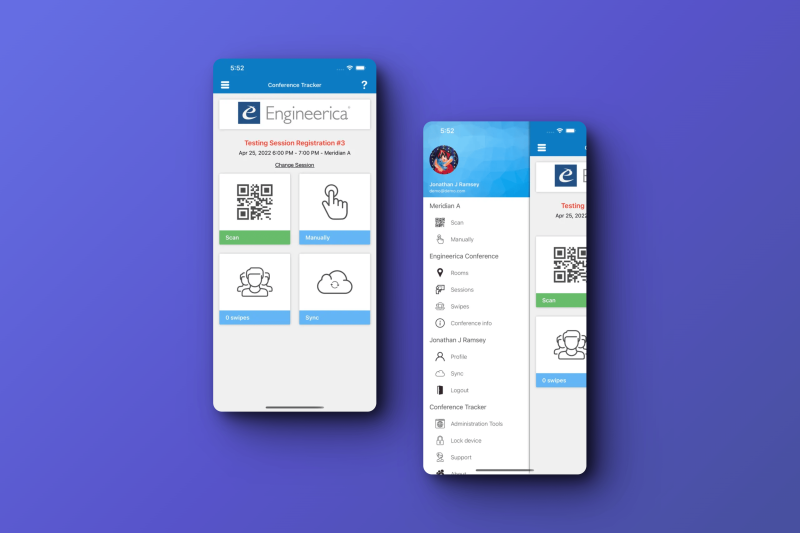
Ideal for professional associations and mission-driven organizations that can bundle CEU credits with attendance. The dual value proposition, professional development plus charitable contribution, justifies higher ticket prices and attracts attendees whose employers may cover registration. Conference Tracker handles the full lifecycle for this format, from branded registration pages with embedded payment processing to session-level attendance scanning and automatic CEU credit calculation, replacing the three or four separate tools most organizers patch together.
Community events
Restaurant partnership nights, yard sales, bingo nights, and similar low-barrier events cost almost nothing to produce. They also generate modest revenue. Their real value is cultivation: introducing new supporters to your organization in a low-commitment setting. A restaurant fundraiser night where the restaurant donates 15–20% of the evening’s sales won’t fund your annual budget, but it puts 50 new names on your mailing list with zero upfront cost.
| Format | Team size needed | Revenue ceiling | Lead time | Best-fit audience |
|---|---|---|---|---|
| Gala / formal dinner | 5–10 | High | 4–6 months | Existing major donors |
| Charity auction (silent/live) | 4–8 | Medium–High | 3–5 months | Mid-to-major donors |
| Walkathon / 5K | 3–5 staff + 8–12 volunteers | Medium | 3–4 months | Community / new donors |
| Conference / workshop | 3–6 | Medium–High | 4–6 months | Professional associations |
| Community event | 1–3 | Low | 2–4 weeks | New supporters |
The format you pick determines your cost structure, your timeline, and your team’s workload for the next three to six months. Choose based on the donors you already have, not the donors you wish you had.
Setting a revenue goal that accounts for real costs
The most common budgeting mistake in nonprofit fundraising events is setting a gross revenue target, hitting it, and then discovering that after expenses, the net contribution to the mission is half what the board expected, because the goal was set without subtracting event costs.
The fix is a simple formula:
(Target net revenue) + (Estimated total expenses) = Gross revenue goal
Then back into the ticket price, sponsorship target, and auction or donation revenue needed to hit that gross number.
A concrete example: your nonprofit needs $40,000 net from the event. You estimate $15,000 in expenses: venue, catering, printing, insurance, AV. That means your gross revenue target is $55,000. If 200 attendees pay $100 each, tickets generate $20,000. That leaves $35,000 that must come from sponsorships, auction proceeds, and direct donations during the event.
When you lay it out this way, the planning conversation shifts. Instead of “How many tickets can we sell?” the question becomes “What’s our sponsorship pipeline, and is $35,000 realistic given our corporate relationships?”
The 33% rule
Some nonprofit financial advisors recommend that event costs should not exceed one-third of gross revenue. The practical implication: if you’re spending $15,000, gross revenue should be at least $45,000 for the event to be considered efficient. Events that consistently run above 33% cost-to-revenue deserve scrutiny, not because they’re failures, but because the same net revenue might be achievable through a lower-cost format.
This rule also exposes a hidden trap with galas. A gala that grosses $80,000 sounds impressive until you realize $35,000 went to the venue, catering, and entertainment. The net is $45,000, the same amount a well-run auction dinner might produce at half the cost.
Building a fundraising event budget line by line
Most event budgets underestimate at least two line items: catering (especially with the 3.6% food price increase), AV and tech rental, and payment processing fees consistently come in over projection.
Here are the budget categories that need explicit line items, not lumped into “miscellaneous”:
- Venue rental, including any overtime charges if your event runs past the contracted window
- Catering, per-head cost multiplied by expected attendance, plus a 5–10% overage for walk-ins and last-minute RSVPs
- Insurance and permits, event liability insurance is typically required by venues and runs a few hundred dollars for a single-day event
- AV and tech, microphones, projectors, screens, and any streaming equipment for hybrid events
- Printing, badges, signage, programs, and auction bid sheets
- Staff overtime or temporary labor, if your team is salaried, their overtime still has a cost; if you’re hiring event-day staff, budget for it
- Payment processing fees, typically 2.9% + $0.30 per card transaction, which on a $55,000 gross event can exceed $1,600
- Post-event mailing, thank-you letters, tax receipts, and any printed follow-up materials
Payment compliance isn’t optional
If you’re accepting card payments onsite, and you should be, because cash-only events leave money on the table, your payment setup needs to meet current security standards. PCI DSS v3.2.1 was retired on March 31, 2024, and organizations accepting card payments must now validate against PCI DSS v4.0. Confirm that your payment processor and any hardware (card readers, kiosks) meet the current standard before event day.
Using a platform like Conference Tracker with built-in payment integrations, Stripe, Authorize.net, or PayPal, reduces the compliance surface area compared to stitching together a standalone card reader, a separate registration spreadsheet, and a third-party receipt system. Fewer systems handling card data means fewer points of vulnerability.
Build a 10–15% contingency line into every event budget. At least one vendor cost will come in higher than quoted, and the contingency line is what keeps that surprise from eating into your net revenue.
Conference Tracker
Check people in fast. Prove they were there.
Conference Tracker scans attendees with the phones your staff already carry, tracks time in every session, and issues certificates and CEU transcripts on its own. One conference ran 2,623 attendees across 186 sessions on it.
30+ years building attendance tracking for events and education

Locking in sponsors before registration opens
When your registration page goes live before your sponsorship packages are finalized, you lose the single most valuable asset sponsors are paying for: logo visibility at the moment attendees are most engaged.
The 60-day sponsorship window is real. Corporate sponsors for nonprofit fundraising events almost universally require confirmed attendance projections and logo placement commitments at least eight weeks out. Organizations that open registration late, common when venue contracts drag, frequently leave 20–30% of potential sponsorship revenue on the table because the ask comes too close to event day.
A three-tier sponsorship structure
Keep it simple. Three tiers with clear deliverables at each level:
Presenting sponsor, logo on registration page, logo on all printed badges, verbal recognition during program, premium booth space, access to attendee list (with consent), and social media mentions in all pre-event promotion.
Supporting sponsor, logo on registration page, logo on event signage, verbal recognition, and social media mentions.
Community sponsor, logo on event signage and a mention in the printed program.
The two most-requested deliverables, across every sponsorship conversation, are logo placement on the registration page and logo placement on printed badges. Sponsors want visibility at the moment attendees are arriving and checking in: that’s when attention is highest.
Conference Tracker supports sponsor logo placement on registration pages and on printed badges, so fulfilling these deliverables doesn’t require a graphic designer building custom assets for each tier. You upload the logos, assign them to the sponsor level, and the system handles placement.
If you’re still building your audience before the event, tips for promoting your event can help you hit the attendance projections sponsors need to see before they commit.
Registration and ticketing that doesn’t leak revenue
Registration is where fundraising events quietly lose money. Not from fraud or theft, from friction.
Three pain points show up repeatedly. First, a generic registration form that doesn’t collect the data needed for post-event reporting. You find out after the event that you don’t have employer names, dietary restrictions, or session preferences because the form only asked for name and email.
Second, a payment flow that redirects attendees to a third-party checkout page. Every redirect is a drop-off point. An attendee who clicks “Register,” gets bounced to an external payment page, and then has to navigate back to confirm, that attendee abandons the process at a measurably higher rate than one who completes everything on a single page.
Third, no automated confirmation or receipt. Without one, the team fields a wave of “did my payment go through?” emails for the next 48 hours.
Branded registration with embedded payment
Branded registration pages with embedded payment processing, Stripe, PayPal, or Authorize.net, keep the attendee on a single page, reduce cart abandonment, and automatically generate receipts. Conference Tracker provides this out of the box: the registration page carries your event branding and sponsor logos, the payment processes inline, and the confirmation email fires immediately.
Ticket tiers and early-bird pricing
Set at least two price points: early-bird and standard, with a clear deadline. Early-bird pricing serves double duty. It generates cash flow before the event, and it gives you confirmed attendance numbers to share with sponsors inside that 60-day window.
One detail that trips up nonprofits at tax time: IRS Publication 526 requires donors to deduct only the amount exceeding the fair market value of goods or services received. If your $100 ticket includes a $40 dinner, only $60 is deductible. Registration confirmations should clearly state the deductible portion to avoid donor confusion, and to protect your organization’s credibility with donors who itemize.
Day-of logistics: check-in, badges, and keeping the room moving
The first five minutes of your event set the tone for the entire evening: if attendees spend those minutes standing in a check-in line while a volunteer scrolls through an alphabetized spreadsheet, you’ve already lost momentum.
The check-in bottleneck
A 500-person event with manual name-lookup check-in averages 45–90 seconds per attendee. That math produces a 20-minute line at the door, assuming a steady flow, which never happens because 60% of attendees arrive in the first 30 minutes. QR code self-check-in cuts the per-person time to under 10 seconds. The attendee scans a code from their confirmation email, the system matches them to their registration record, and they’re through.
On-site badge printing
Pre-printed badge tables are a relic. Alphabetizing 300 badges, dealing with name misspellings, and handling walk-ins who aren’t in the stack, all of this disappears with on-demand badge printing. The attendee checks in, and a badge prints with their name, organization, and any sponsor branding. No table to staff, no badges to sort.
Session tracking for multi-track events
If your fundraising event includes breakout sessions, workshops, or a keynote, scanning attendees into each session creates an attendance record that feeds directly into post-event reporting. For professional development events, session-level attendance data is the basis for CEU credit calculation, without it, you’re asking attendees to self-report hours, which no licensing board considers reliable.
Engagement tools that keep energy high
Raffles and prize wheels aren’t just fun: they’re engagement mechanics that fill dead time between program segments and give sponsors an additional visibility touchpoint when prizes carry sponsor branding. Building these into the event platform instead of running them manually means the results are tracked, winners are recorded, and you have data for your post-event sponsor report.
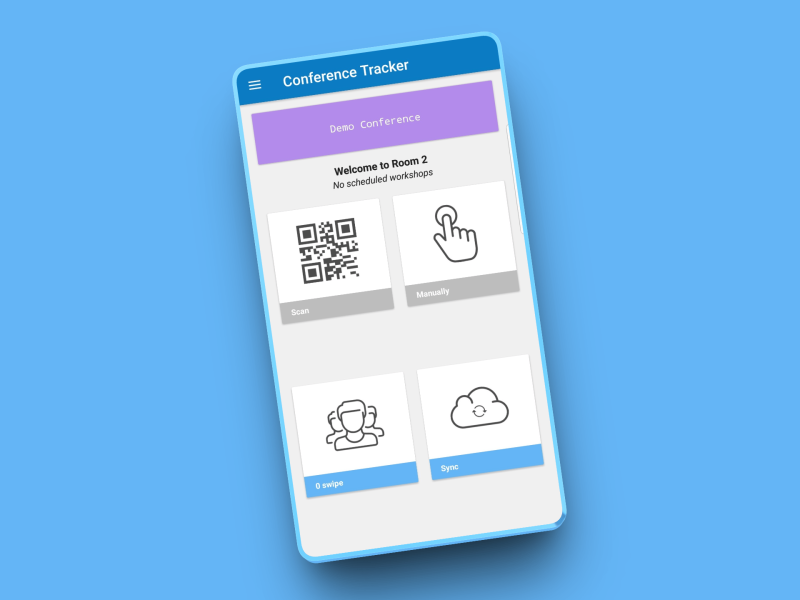
Conference Tracker handles QR code check-in, on-site badge printing, session-level attendance scanning, and built-in raffle and prize wheel features. That’s four vendor setups consolidated into one platform, which matters when your team is three people and event day is already a 14-hour shift.
Legal and compliance details most event planners skip
Compliance isn’t glamorous, but getting it wrong is expensive. These are the four areas where nonprofit event planners most often discover gaps after the fact.
State charitable solicitation registration
Charities soliciting contributions in many U.S. states must register with state charity offices, and that includes solicitations via events, auctions, and ticketed fundraisers. If your event draws attendees from multiple states, or if you’re promoting online and accepting donations from out-of-state supporters, check the NASCO directory of state charity offices to confirm your registration status. The penalty for soliciting without registration varies by state, but it can include fines and loss of tax-exempt status for contributions received.
Raffle and gaming laws
Raffle legality varies by state. Some states require a separate gaming permit. Others prohibit nonprofit raffles entirely. A 50/50 drawing that’s perfectly legal in New Jersey may violate gambling statutes in Alabama. Verify local requirements before advertising any raffle, and keep the verification documentation on file, it’s the first thing a state auditor asks for.
IRS written acknowledgment
For donations over $250, the nonprofit must provide a written acknowledgment that includes the amount of the contribution and a description, with a good-faith estimate of value, of any goods or services provided in return. This isn’t optional. Without it, the donor can’t claim the deduction, and your organization looks unprofessional. Automate this through your registration and payment system so acknowledgments generate at the point of transaction, not two weeks later when someone remembers.
Data privacy for registration
Collecting attendee information- name, email, employer, dietary restrictions- triggers data handling obligations. If any attendees are EU-based, GDPR consent requirements apply to marketing communications sent after the event. Even for a domestic-only event, having registration, payment, and attendee data in a single system with export controls simplifies compliance compared to reconciling data across three separate tools where access permissions are inconsistent.
Post-event reporting and donor follow-up
The event ended at 10 PM. By noon the next day, your board chair wants numbers, your presenting sponsor wants an impact summary, and your development director wants to know how many new donors walked through the door. If your data lives in four different systems, you’ll spend the next week building a report instead of following up with donors.
The 48-hour follow-up window
Thank-you emails sent within two days of the event tend to convert at higher rates to repeat gifts than those sent a week or more later. Automate the first thank-you through your registration platform so it fires the morning after the event, then follow up with a personalized note from a staff member within the week.
What a board-ready report includes
Your board doesn’t want a narrative. They want a one-page summary with these numbers: gross revenue, net revenue, cost breakdown by category, attendee count (registered vs. actual), new donor count, average gift size, and comparison to the prior year’s event. If you can’t produce this within a week of the event, your data infrastructure is the bottleneck.
Metrics beyond dollars raised
Donor acquisition, how many first-time donors attended, is arguably more valuable than the night’s gross revenue, because it represents future giving potential. Session attendance rates tell you which content resonated and which fell flat. Sponsor satisfaction, measured by whether they received the visibility promised, determines whether they renew next year.
Real-time analytics dashboards during the event feed directly into post-event reports. Attendance numbers, session capacity, and check-in timestamps are already captured, so the report is 80% built before the event ends. Conference Tracker generates audit-ready reports in CSV and PDF, pulling from registration, payment, attendance, and session data without manual reconciliation.
For strategies that build attendance momentum before the event even starts, event marketing ideas organized by timeline and budget can sharpen your pre-event outreach.
Turning one event into a recurring donor pipeline
A fundraising event that generates $55,000 in one night and zero follow-up revenue is a transaction. One that converts 15% of attendees into monthly givers is a pipeline.
The lifetime value math makes the case: recurring donors deliver 5x the lifetime value of one-time donors, per Classy’s State of Modern Philanthropy 2023. A $25 monthly pledge from a single attendee is worth $1,500 over five years. Convert 30 attendees to that pledge level, and you’ve generated $45,000 in future revenue from a single event, nearly matching the event’s own net.
The conversion mechanic
During the event, present a clear recurring giving option alongside the one-time donation ask. A QR code on table cards linking to a recurring donation page works better than a paper pledge card because it captures the commitment in real time. Frame the monthly amount as a fraction of the ticket price: “Your $100 ticket tonight funds one evening. $25 a month funds the whole year.”
The framing matters more than the amount. Donors who feel like they’re extending the event’s impact, rather than starting a new financial obligation, convert at higher rates.
Post-event segmentation
Use registration and attendance data to segment attendees into three groups:
- Attended and donated, your warmest prospects for a recurring ask
- Attended but did not donate, they showed up, which signals interest; the barrier was likely the ask format or timing
- Registered but did not attend, still on your list, but need a different message than someone who experienced the event firsthand
Tailor follow-up messaging to each group. A blanket “thanks for coming” email to all three segments wastes the data you collected.
Timing the recurring ask
The GivingTuesday 2023 Impact Report estimated $3.1 billion in online giving from approximately 34 million adults. Nonprofits that time their post-event recurring ask to coincide with GivingTuesday, typically late November, can ride the momentum of a national giving moment. If your event falls in September or October, the follow-up sequence lands right in the GivingTuesday window.
The data you capture tonight builds next year’s event
Every attendee record, session check-in, and donation receipt captured cleanly during a fundraising event for nonprofit organizations becomes raw material for three things: next year’s sponsorship pitch (“Here’s exactly who attended and how they engaged”), next quarter’s board report (“Net revenue was $42,000, up 12% from last year, with 38 new donors acquired”), and the recurring donor relationship that outlasts any single evening.
The organizations that run the most efficient fundraising events aren’t the ones with the biggest budgets. They’re the ones that treat every data point, from registration to check-in to post-event follow-up, as a decision input, not an administrative task. When your registration, payment, attendance, and reporting live in one system, the event doesn’t end when the last guest leaves. It feeds the next campaign, the next sponsorship conversation, and the next ask.
Start with the revenue goal formula. Work backward to the ticket price and sponsorship target. Lock in sponsors before registration opens. Run check-in on QR codes, not spreadsheets. Send the thank-you email within 48 hours. And capture every interaction in a system that can produce a board report without a week of manual reconciliation. That’s the difference between a fundraising event and a fundraising program.